Design — 2025
PLY Stool
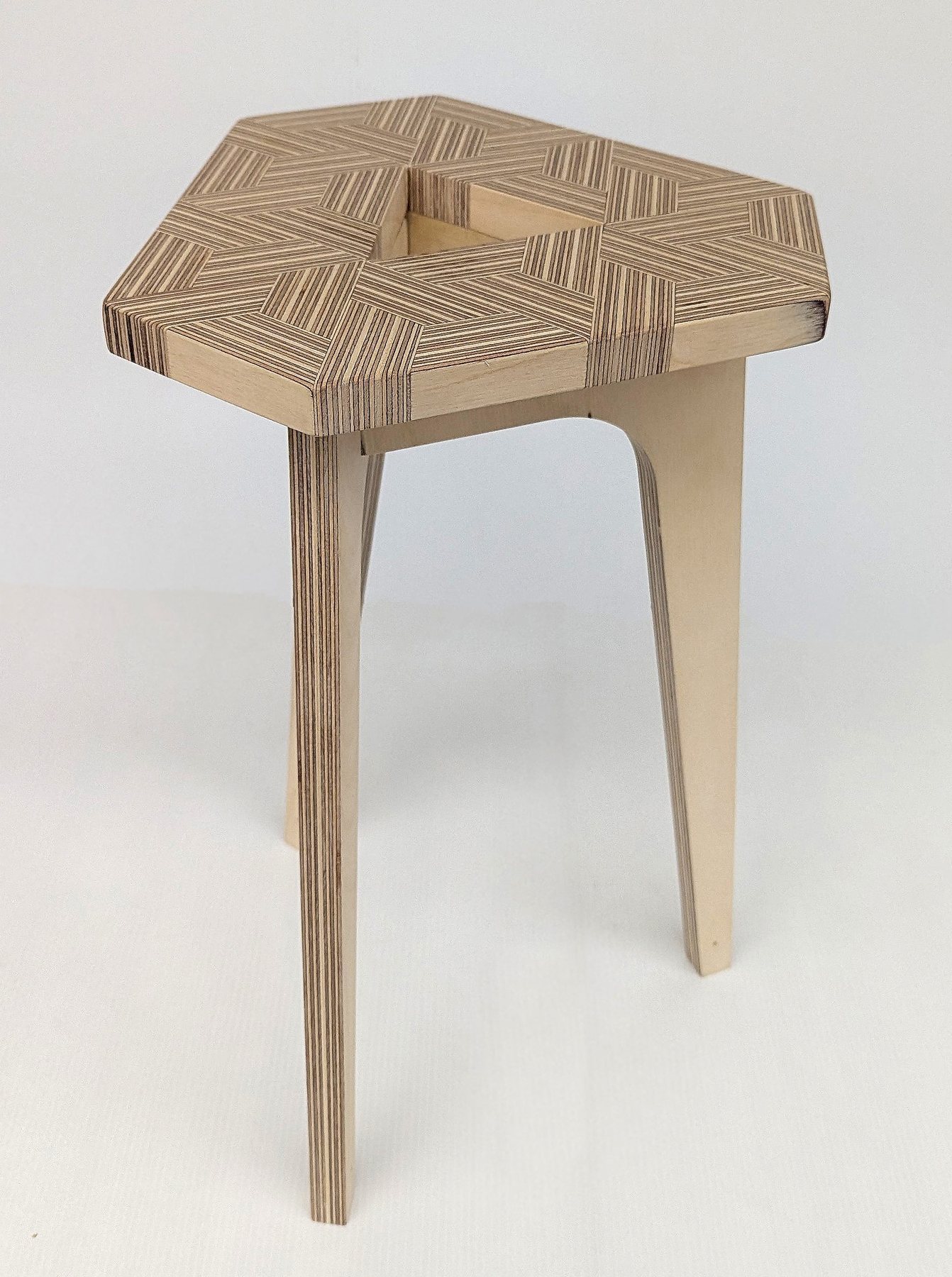
One sheet of plywood, re-laminated so its end grain becomes the surface: a patterned hexagonal seat on hand-jointed splayed legs.
- Year
- 2025
- Discipline
- Furniture / fabrication
- Material
- One sheet 600 × 1200 mm plywood
- Processes
- Rip & re-lamination, segment cutting, hand joinery
- Context
- Industrial Design Prototyping, RMIT
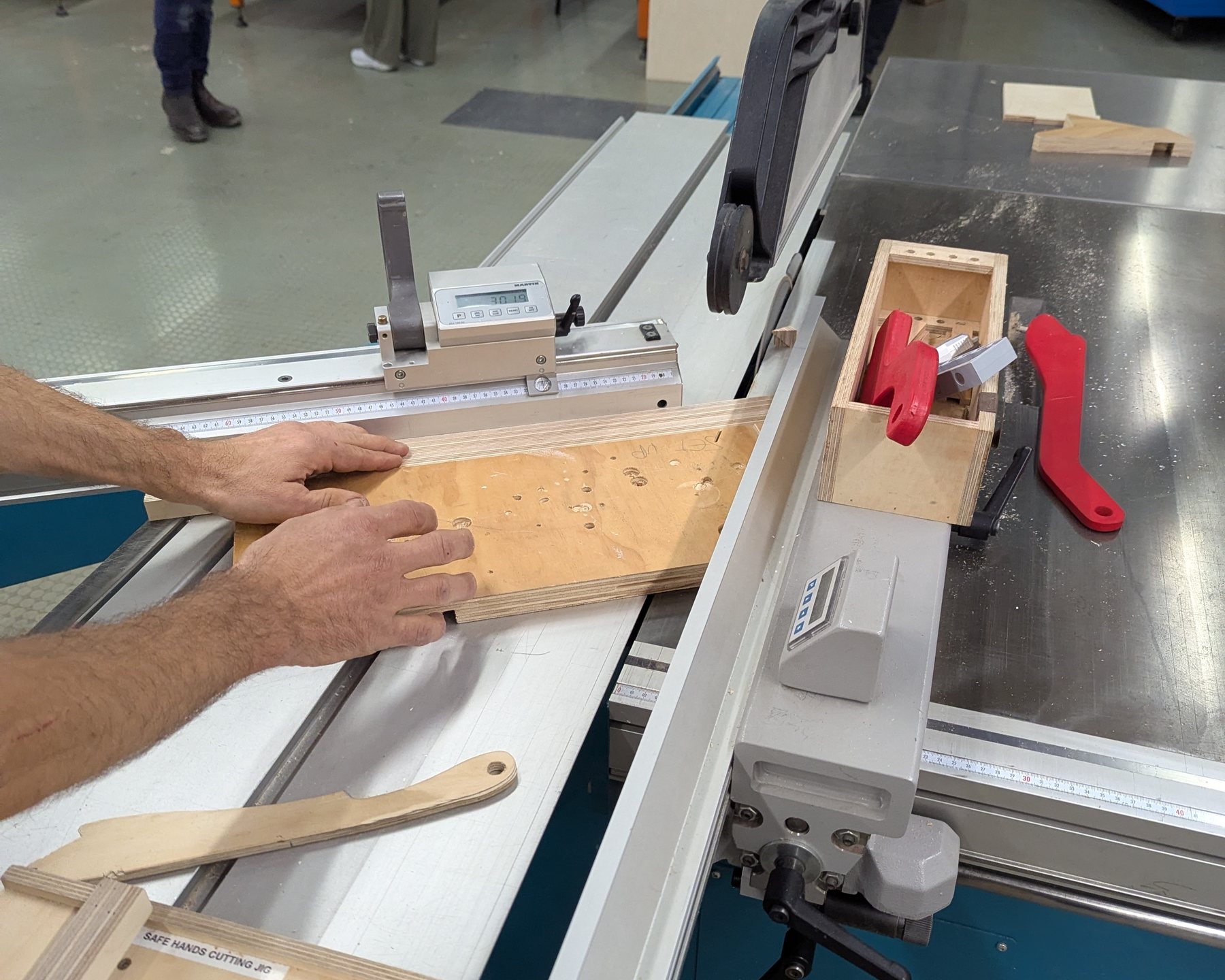
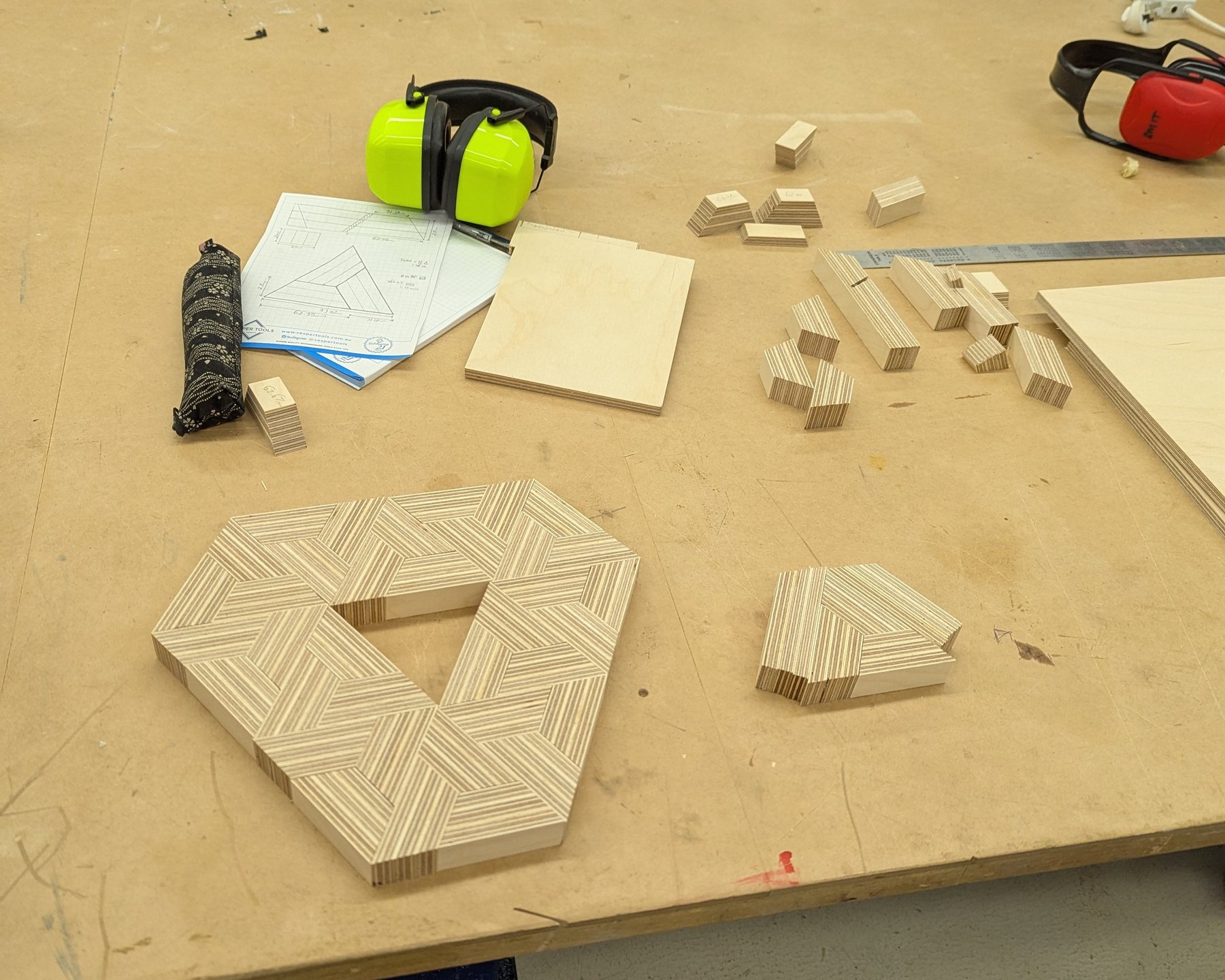
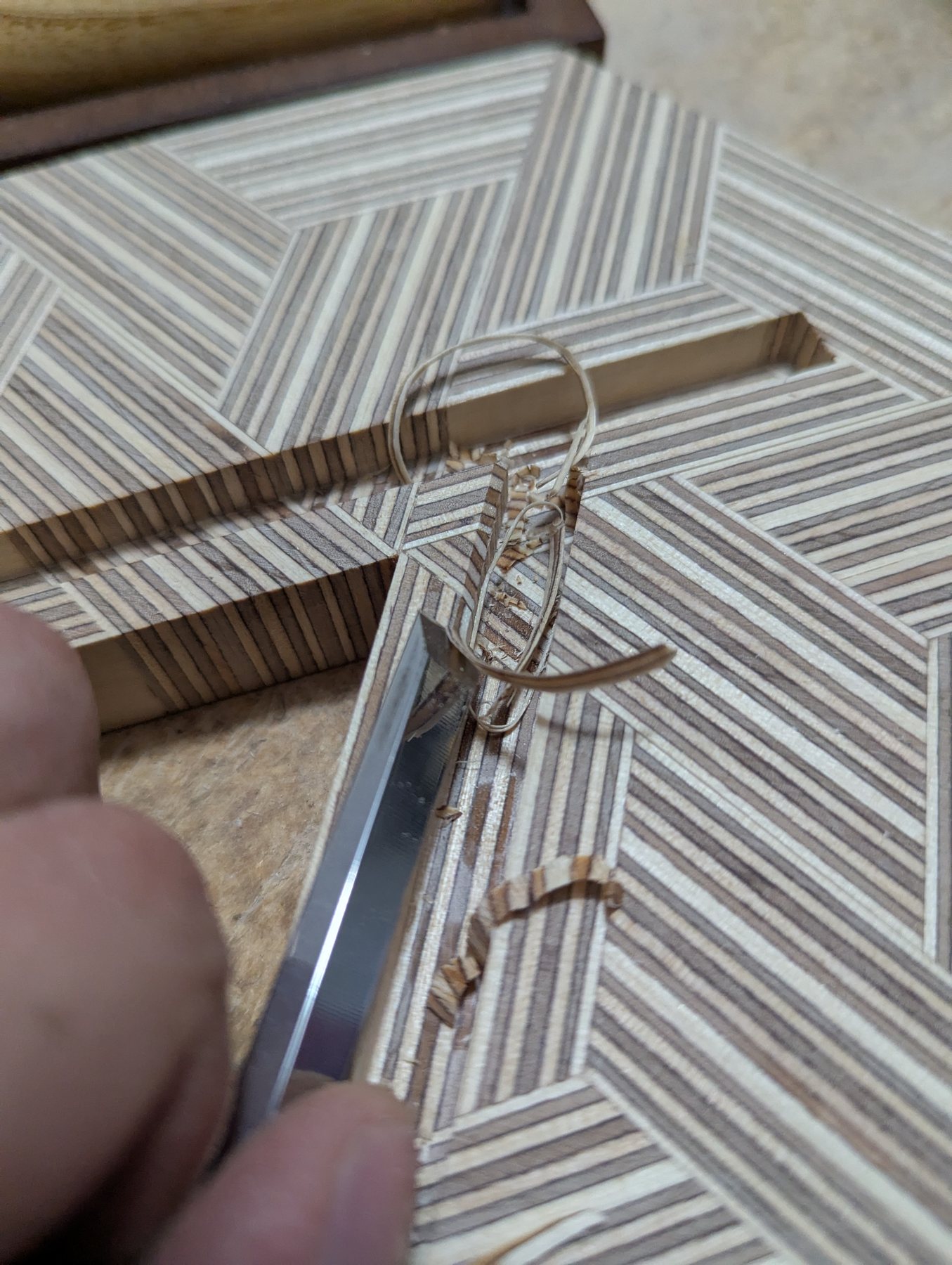
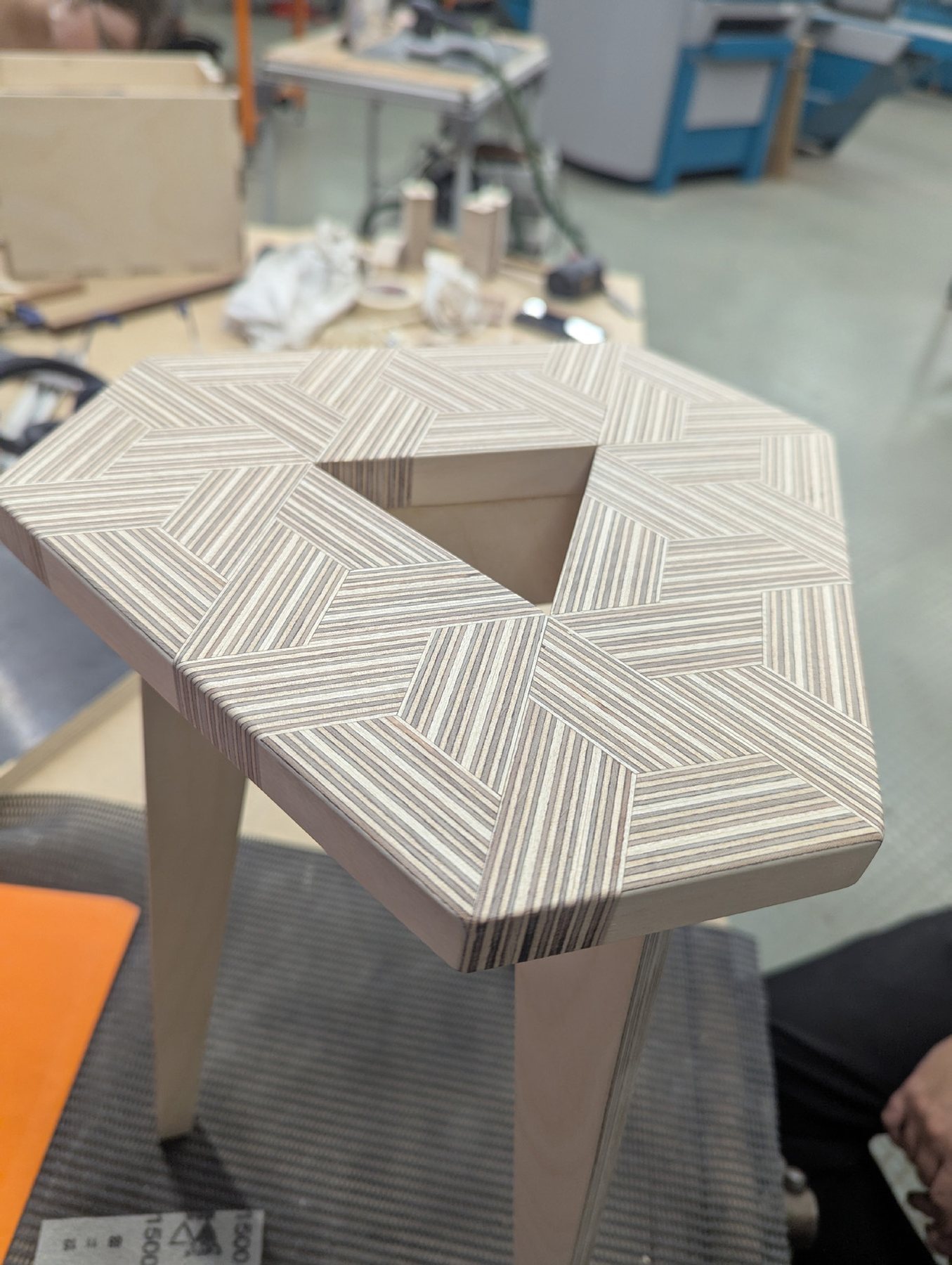
The brief allowed one sheet of 600 × 1200 mm plywood, a material nobody calls beautiful. The response was to stop treating it as sheet material: rip it, re-laminate it, and turn its exposed end grain into the surface itself. Chevron-cut segments assemble into a hexagonal field whose plies read as fine parallel lines, shifting direction at every joint around a central void.
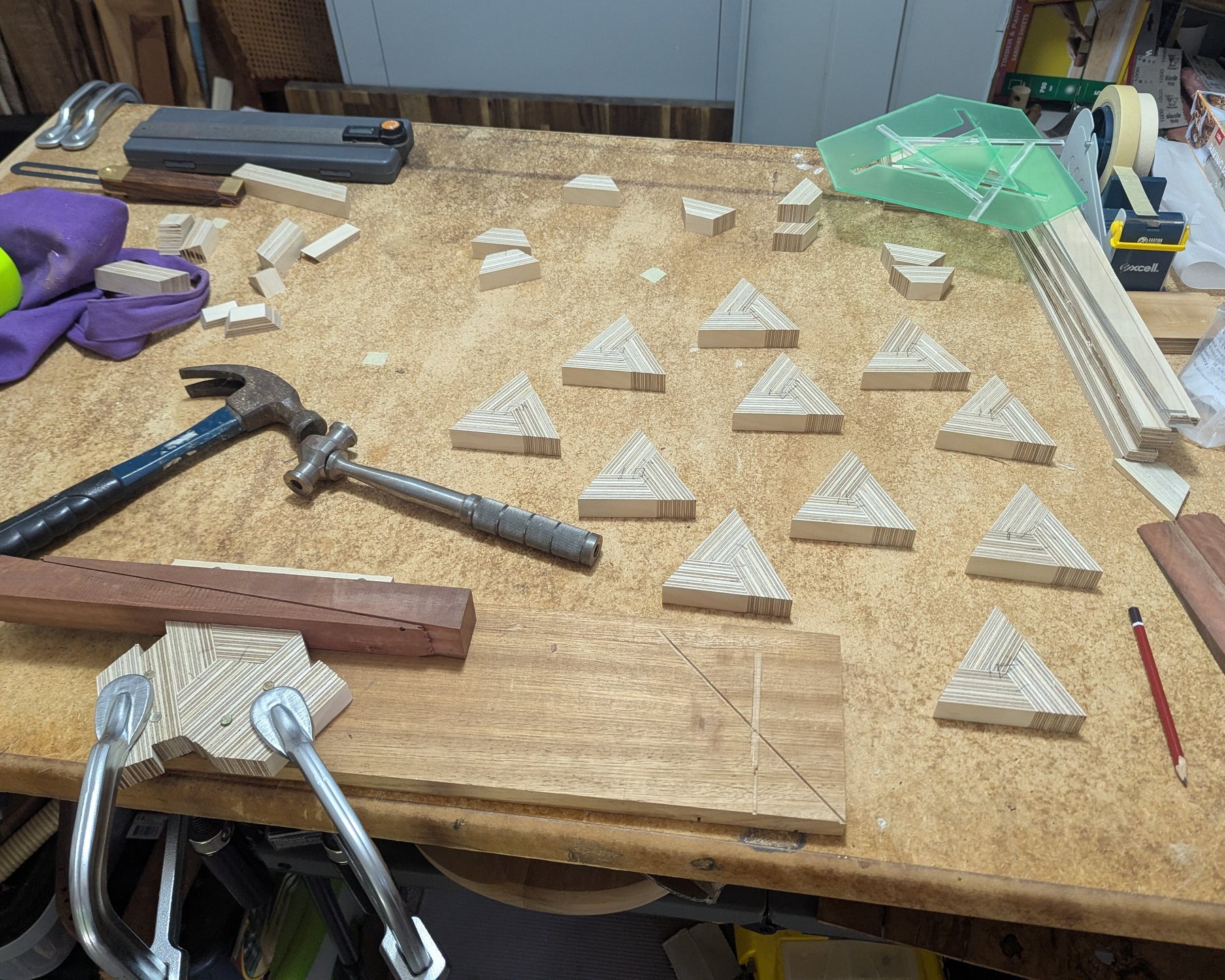
The pattern was resolved through thumbnail models at 1:4 and 1:2, a 1:1 pattern test and a 1:1 form test before committing the single sheet. Fabrication ran through ripping and re-gluing the laminate stock, precision-cutting the segments, assembling the field, and hand-cut joinery for the three splayed legs.